
Finding the right synonym for funny depends on what you mean. You might be describing something that makes people laugh, someone with a great sense of humor, an amusing situation, or something strange and unexpected.
The best replacement changes with the context.
Choosing a more precise word can also improve your writing. A casual conversation may call something hilarious or hysterical, while professional or academic writing may benefit from amusing, humorous, or comical.
This guide explains the closest alternatives, their differences, tone, examples, and the situations where each one works best.
Quick Answer
Common synonyms for funny include amusing, humorous, comical, entertaining, hilarious, laughable, witty, playful, lighthearted, clever, absurd, ridiculous, and droll. The best choice depends on the intended meaning. For example, amusing is neutral, hilarious suggests very strong humor, and witty describes clever humor.
Quick List: Synonyms for Funny
Here are useful alternatives grouped by meaning and tone:
Closest and Neutral Alternatives
- Amusing
- Humorous
- Comical
- Entertaining
- Comic
- Laughable
- Witty
- Playful
- Lighthearted
- Clever
Stronger Alternatives
- Hilarious
- Hysterical
- Side-splitting
- Laugh-out-loud
- Gut-busting
- Riotous
Casual Alternatives
- Hysterical
- Cracking me up
- A riot
- A hoot
- Priceless
- Too funny
- Laugh-out-loud
Funny in a Strange or Unexpected Way
- Absurd
- Ridiculous
- Bizarre
- Outlandish
- Quirky
- Odd
- Peculiar
- Unusual
Clever or Intelligent Humor
- Witty
- Clever
- Sharp
- Quick-witted
- Droll
- Sardonic
- Dry
Formal Alternatives to Funny
There is no single formal replacement that works in every sentence. Humorous, amusing, and comical are generally the safest choices in formal writing, but each has a slightly different meaning.
Humorous
Meaning: Causing amusement or showing humor.
Explanation: Humorous is one of the most versatile alternatives to funny. It works well when describing writing, speeches, comments, stories, advertisements, or people.
Example:
The speaker gave a humorous presentation about workplace communication.
Best Use: Reports, articles, presentations, reviews, and professional writing.
Worst Use: Very casual conversations where funny or hilarious would sound more natural.
Tone: Neutral to formal.
Amusing
Meaning: Pleasantly entertaining or mildly funny.
Explanation: Amusing usually suggests that something makes you smile or laugh without implying extremely strong humor.
Example:
The article contains several amusing observations about modern office life.
Best Use: Professional writing, reviews, essays, and polite descriptions.
Worst Use: Situations where something is extremely funny and you want to emphasize a powerful reaction.
Tone: Polished and understated.
Comical
Meaning: Funny in appearance, behavior, or situation.
Explanation: Comical often describes something that resembles comedy or looks amusing. It can sometimes suggest that a person’s actions are unintentionally funny.
Example:
His attempt to assemble the furniture became a comical disaster.
Best Use: Describing situations, behavior, scenes, or appearances.
Worst Use: Serious professional situations where calling an event comical could sound insensitive.
Tone: Formal to neutral.
Entertaining
Meaning: Providing enjoyment or holding someone’s attention.
Explanation: Entertaining is broader than funny. Something can be entertaining without making anyone laugh.
Example:
The author presents an entertaining account of her first year as a teacher.
Best Use: Book reviews, presentations, articles, performances, and general descriptions.
Worst Use: When you specifically need to say that something is humorous.
Tone: Neutral and professional.
Comic
Meaning: Related to comedy or amusing in nature.
Explanation: Comic can describe a person, performance, situation, character, or style of humor. It is also commonly used as a noun or adjective in entertainment contexts.
Example:
The film relies on comic situations rather than complicated jokes.
Best Use: Literature, film reviews, theater, entertainment, and formal discussion of comedy.
Worst Use: When you simply want to describe a mildly amusing comment.
Tone: Neutral to formal.
Witty
Meaning: Clever and amusing, especially through quick or intelligent remarks.
Explanation: Witty is not a general synonym for funny. It focuses on cleverness.
Example:
The columnist is known for her witty observations about politics and culture.
Best Use: Describing remarks, writers, speakers, dialogue, and clever humor.
Worst Use: Physical comedy or situations that are funny but not clever.
Tone: Sophisticated and positive.
Droll
Meaning: Amusing in an unusual, understated, or dry way.
Explanation: Droll describes a distinctive kind of humor that may be subtle rather than loud or obvious.
Example:
His droll comments kept the audience quietly entertained.
Best Use: Literary criticism, reviews, and descriptions of dry humor.
Worst Use: Basic everyday writing where the word may feel unnecessarily sophisticated.
Tone: Formal or literary.
Playful
Meaning: Light, fun, and not overly serious.
Explanation: Playful does not necessarily mean laugh-out-loud funny. It can describe a lighthearted tone, joke, comment, or interaction.
Example:
The company used a playful tone in its new advertising campaign.
Best Use: Marketing, branding, creative writing, and friendly communication.
Worst Use: When describing genuinely hilarious material.
Tone: Friendly and positive.
Lighthearted
Meaning: Cheerful, relaxed, and free from seriousness or worry.
Explanation: Something lighthearted may be enjoyable without being particularly funny.
Example:
The magazine published a lighthearted story about family vacations.
Best Use: Articles, stories, social posts, newsletters, and friendly communication.
Worst Use: Serious subjects where a cheerful tone could seem inappropriate.
Tone: Warm and approachable.
Laughable
Meaning: So foolish, unreasonable, or absurd that it deserves to be laughed at.
Explanation: Laughable can be negative. It often suggests that an idea or claim is ridiculous rather than simply humorous.
Example:
The claim that the outdated system was perfect was almost laughable.
Best Use: Critical writing and situations involving absurdity.
Worst Use: Polite workplace communication or sincere praise.
Tone: Critical, dismissive, or sarcastic.
Semi-Formal and Neutral Alternatives

These choices are useful when you want to avoid repeating funny without making your writing sound overly formal.
Amusing
A safe neutral choice for something that produces mild enjoyment or laughter.
Example: The teacher shared an amusing story during the lesson.
Best Use: School, work, articles, and everyday writing.
Worst Use: Extremely funny situations.
Tone: Neutral and polished.
Humorous
A dependable alternative for writing, speeches, comments, and people who use humor.
Example: The report includes several humorous examples.
Best Use: Professional and educational contexts.
Worst Use: Very casual conversations where it may sound stiff.
Tone: Neutral to formal.
Entertaining
Describes something enjoyable rather than necessarily funny.
Example: The documentary was informative and entertaining.
Best Use: Reviews, presentations, websites, and general writing.
Worst Use: When humor itself is the central point.
Tone: Neutral.
Comical
Useful when a situation or behavior is funny because of how it looks or unfolds.
Example: Their misunderstanding created a comical situation.
Best Use: Stories, reviews, and descriptions.
Worst Use: Sensitive situations involving real hardship.
Tone: Neutral.
Clever
Describes humor that demonstrates intelligence or creativity.
Example: She made a clever joke about the confusing instructions.
Best Use: Comments, jokes, advertising, and creative writing.
Worst Use: Simple physical comedy.
Tone: Positive and neutral.
Quirky
Describes something unusual, distinctive, and often charmingly strange.
Example: The restaurant has a quirky sense of humor.
Best Use: Describing personalities, brands, designs, and creative work.
Worst Use: When you specifically mean that something caused laughter.
Tone: Casual to neutral.
Absurd
Describes something extremely unreasonable, illogical, or bizarre.
Example: The movie uses absurd humor to criticize social expectations.
Best Use: Comedy, literature, film, and cultural commentary.
Worst Use: When you simply mean pleasant or amusing.
Tone: Neutral to analytical.
Ridiculous
Describes something so unreasonable, exaggerated, or foolish that it may seem funny.
Example: Wearing three coats in summer would look ridiculous.
Best Use: Informal writing, criticism, and conversational English.
Worst Use: Formal situations where the word may sound insulting.
Tone: Strong, often negative.
Bizarre
Describes something very strange or unusual.
Example: The story took a bizarre but surprisingly funny turn.
Best Use: Strange events, stories, behavior, and unusual humor.
Worst Use: As a direct replacement when the thing is simply amusing.
Tone: Neutral to informal.
Unusual
Describes something different from what is normal or expected.
Example: The comedian has an unusual style of humor.
Best Use: Professional and neutral writing.
Worst Use: When you need to communicate that something is specifically humorous.
Tone: Neutral.
Informal and Casual Alternatives
Casual English has many colorful ways to describe something funny. These are usually better for conversation, texts, social media, and friendly messages than formal writing.
Hilarious
Meaning: Extremely funny.
Example: That video was hilarious.
When it sounds natural: Everyday speech, texts, reviews, and social media.
When to avoid it: Formal reports or academic papers unless discussing a person’s exact wording or a cultural work.
Tone: Very informal and enthusiastic.
Hysterical
Meaning: Extremely funny in informal American English.
Example: Her impression of the teacher was hysterical.
When it sounds natural: Casual conversations and entertainment reviews.
When to avoid it: Formal writing or situations where the word could be misunderstood in its other sense related to extreme emotional behavior.
Tone: Very casual and expressive.
A Riot
Meaning: A person or situation that is extremely entertaining or funny.
Example: Your brother is a riot.
When it sounds natural: Friendly conversations.
When to avoid it: Professional correspondence.
Tone: Casual and playful.
A Hoot
Meaning: Someone or something that is very amusing.
Example: That old sitcom is a hoot.
When it sounds natural: Informal American English.
When to avoid it: Academic, legal, or formal business writing.
Tone: Casual and cheerful.
Priceless
Meaning: So funny or amusing that it is extremely enjoyable.
Example: The look on his face was priceless.
When it sounds natural: Informal conversations and social media.
When to avoid it: Formal writing, where the literal meaning can cause ambiguity.
Tone: Casual and expressive.
Cracking Me Up
Meaning: Making me laugh a lot.
Example: Your messages are cracking me up today.
When it sounds natural: Texts, chats, and conversations.
When to avoid it: Professional communication.
Tone: Very conversational.
True Synonyms vs. Contextual Alternatives
Not every word in a synonym list can replace funny in every sentence. The distinction matters.
| Type | What It Means | Can It Replace the Original? |
|---|---|---|
| True synonym | Very close in meaning and grammatical use | Often |
| Near synonym | Similar meaning but with a slightly different emphasis | Sometimes |
| Contextual alternative | Works in a particular situation rather than generally | Only in suitable contexts |
| Broader expression | Covers funny plus additional qualities | Sometimes |
| Narrower expression | Describes one specific type of funny | Only in specific contexts |
For example, amusing is a close alternative to funny, while witty specifically adds the idea of cleverness. Entertaining is broader because something can be entertaining without being funny. Ridiculous can overlap with funny when absurdity creates humor, but it often carries a negative judgment.
Industry-Specific Usage
Business Writing
Business writing usually benefits from precise, neutral terms rather than highly emotional words such as hilarious.
Good choices include:
- Humorous
- Amusing
- Lighthearted
- Playful
- Entertaining
Example:
“The presentation included a few humorous examples that helped explain the topic.”
Corporate Communication
Internal announcements, newsletters, and workplace messages can use lighthearted, playful, or humorous when the subject allows it.
Example:
“The team included a lighthearted message in Friday’s newsletter.”
Avoid describing sensitive workplace matters as hilarious or ridiculous, since the wording may appear dismissive.
Academic Writing
Academic writing generally favors precise terms such as:
- Humorous
- Comical
- Amusing
- Witty
- Absurd
Example:
“The author uses absurd humor to expose contradictions in the narrator’s argument.”
Avoid casual expressions such as a hoot, cracking me up, or too funny.
Customer Service
Customer service requires care. A friendly tone can be useful, but humor should not appear to dismiss a customer’s problem.
Instead of:
“That’s funny!”
consider:
“That’s unusual. Let me look into what happened.”
If the situation genuinely calls for humor, lighthearted or friendly may be safer descriptions than hilarious.
Legal Writing
Legal writing requires precision, so funny should not automatically be replaced with humorous. If the intended meaning is that something is unusual, unreasonable, absurd, or legally questionable, the exact concept should be stated.
For example, ridiculous, laughable, and absurd can introduce evaluative judgments that may be too subjective for formal legal documents. Legal language should describe the relevant facts or legal issue precisely rather than relying on humor-related wording.
Email Communication
For professional emails, humorous, amusing, and lighthearted are generally safer than highly casual alternatives.
For example:
“I appreciated your humorous comment during the meeting.”
sounds more professional than:
“Your comment was hilarious!”
The second sentence is perfectly natural among colleagues who know each other well, but it may be unsuitable for a client.
Email Examples
Client Communication — Humorous
Subject: A Humorous Moment During the PresentationA Humorous Moment During the Presentation
A Humorous Moment During the Presentation
Hi James,
I enjoyed your humorous observation during today’s presentation. It helped lighten the discussion while keeping everyone engaged.
Thank you for bringing that energy to the meeting.
Best,
Maria
Project Update — Lighthearted
Subject: A Lighthearted Project UpdateA Lighthearted Project Update
A Lighthearted Project Update
Hi Team,
We’ve made good progress on the project this week, despite a few unexpected surprises along the way.
I thought I’d share one lighthearted moment: our first draft managed to contain three different versions of the same heading.
Thankfully, we’ve cleaned that up, and the current version is ready for review.
Best,
Daniel
Customer Service — Amusing
Subject: An Amusing Mix-Up in Your OrderAn Amusing Mix-Up in Your Order
An Amusing Mix-Up in Your Order
Hello Sarah,
We discovered an amusing mix-up while reviewing your order. Two items were assigned the wrong labels during processing.
We’ve corrected the error and are checking the shipment before it leaves our facility.
Thank you for your patience.
Kind regards,
Customer Support
Internal Workplace Email — Playful
Subject: A Playful Reminder About Friday’s MeetingA Playful Reminder About Friday’s Meeting
A Playful Reminder About Friday’s Meeting
Hi Everyone,
Just a playful reminder that our team meeting is scheduled for Friday at 10 a.m.
Please bring your updates, questions, and, if possible, your best ideas for solving our current scheduling puzzle.
See you then,
Alex
Academic Communication — Witty
Subject: Witty Examples for the Class DiscussionWitty Examples for the Class Discussion
Witty Examples for the Class Discussion
Dear Professor Lee,
Thank you for recommending the additional reading. I found the author’s witty examples particularly useful because they made the main argument easier to understand.
I’ll include the text in my notes for tomorrow’s discussion.
Best regards,
Nadia
Short Dialogue Examples
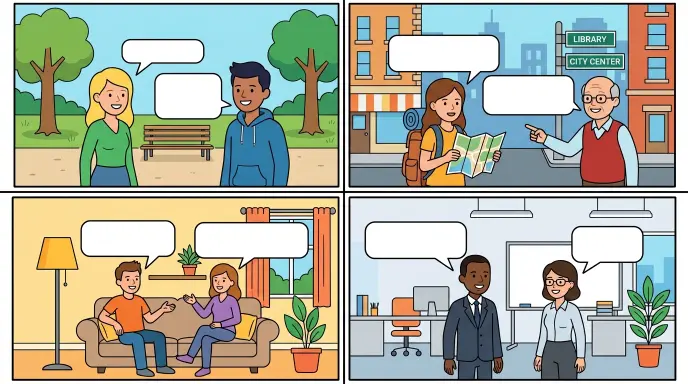
Workplace
Person A: Did you read the message from Tom?
Person B: Yes. His response was surprisingly witty.
Person A: I thought so too. It made the whole conversation less tense.
Classroom
Person A: What did you think of the story?
Person B: It was amusing, especially the ending.
Person A: Same here. I didn’t expect that final joke.
Customer Service
Person A: The tracking page says my package was delivered to a bakery.
Person B: That’s certainly unusual. Let me check the delivery details for you.
Casual Conversation
Person A: Did you see that video?
Person B: Yes! It was hilarious.
Person A: I watched it three times.
Professional Discussion
Person A: How would you describe the presentation?
Person B: It was entertaining without losing its professional focus.
Person A: I agree. The examples helped keep everyone’s attention.
How to Replace “Funny” in a Sentence
Example 1
Original:
The movie was funny.
Alternative:
The movie was hilarious.
Why it works:
Hilarious makes the reaction much stronger. It suggests that the movie produced a lot of laughter.
Example 2
Original:
She made a funny comment.
Alternative:
She made a witty comment.
Why it works:
Witty suggests that the comment was clever as well as amusing.
Example 3
Original:
The article was funny.
Alternative:
The article was amusing.
Why it works:
Amusing sounds more neutral and restrained.
Example 4
Original:
He gave a funny speech.
Alternative:
He gave a humorous speech.
Why it works:
Humorous is better suited to professional or academic descriptions.
Example 5
Original:
The situation was funny.
Alternative:
The situation was comical.
Why it works:
Comical emphasizes the amusing nature of the situation itself.
Example 6
Original:
The advertisement was funny.
Alternative:
The advertisement was playful.
Why it works:
Playful shifts the emphasis from laughter to a light, creative style.
Example 7
Original:
His behavior was funny.
Alternative:
His behavior was quirky.
Why it works:
Quirky emphasizes unusual or distinctive behavior rather than directly stating that it caused laughter.
Example 8
Original:
The story was funny because everything went wrong.
Alternative:
The story was absurd because everything went wrong.
Why it works:
Absurd highlights the unreasonable or exaggerated nature of the events. It is not an exact synonym, so it works only when absurdity is part of the humor.
Example 9
Original:
That joke was funny.
Alternative:
That joke was clever.
Why it works:
Clever focuses on intelligence or creativity. It does not necessarily mean everyone will laugh.
Example 10
Original:
The video is funny.
Alternative:
The video is entertaining.
Why it works:
Entertaining broadens the meaning. The video may hold attention and provide enjoyment without necessarily being humorous.
Comparison Table
| Phrase | Tone | Meaning / Scope | Best Use | Example |
|---|---|---|---|---|
| Funny | Neutral | General humor | Everyday English | That was funny. |
| Amusing | Neutral | Mildly enjoyable or funny | Professional writing | The story was amusing. |
| Humorous | Formal-neutral | Characterized by humor | Work and academic writing | It was a humorous speech. |
| Comical | Neutral | Funny in appearance or situation | Stories and reviews | It was a comical mistake. |
| Entertaining | Neutral | Enjoyable, not necessarily funny | Reviews and presentations | The show was entertaining. |
| Witty | Sophisticated | Clever and amusing | Remarks and writing | She made a witty comment. |
| Hilarious | Casual | Extremely funny | Conversation | That video was hilarious. |
| Playful | Friendly | Light and not serious | Marketing and communication | The campaign has a playful tone. |
| Lighthearted | Warm | Cheerful and relaxed | Articles and messages | It was a lighthearted story. |
| Quirky | Casual-neutral | Unusually distinctive | Personalities and creative work | He has a quirky style. |
| Absurd | Analytical | Irrational or bizarre | Comedy and criticism | The film uses absurd humor. |
| Ridiculous | Strong | Foolish or unreasonable | Informal criticism | That excuse is ridiculous. |
| Droll | Literary | Dryly amusing | Reviews and literary writing | His droll humor was memorable. |
Which Alternative Should You Choose?
For Formal Writing
Choose humorous, amusing, or comical.
Humorous is usually the most flexible.
For Business Communication
Use humorous, amusing, lighthearted, or playful, depending on the situation.
For Academic Writing
Prefer humorous, comical, witty, or absurd when the specific meaning calls for them.
For Legal Writing
Avoid casual humor words unless you are describing quoted material or a specific rhetorical feature. Choose precise factual or legal terminology instead.
For Professional Email
Amusing, humorous, and lighthearted are generally safe choices. Use hilarious only when the relationship and situation clearly support a casual tone.
For Everyday Conversation
Funny, hilarious, hysterical, ridiculous, and a riot can sound natural.
For Casual Messages
Use hilarious, priceless, too funny, or cracking me up when you want a relaxed, expressive tone.
Grammar and Usage Guide
Funny Can Have More Than One Meaning
Funny does not always mean humorous.
Compare:
- That movie is funny. — It makes people laugh.
- There is a funny smell in the room. — The smell is strange or unusual.
- That’s funny; I thought I left my keys here. — The situation is strange or unexpected.
Because funny has multiple meanings, the best synonym depends on the sentence.
Funny as an Adjective
Funny is primarily an adjective.
Examples:
- That was a funny story.
- She told a funny joke.
- The situation became funny after everyone realized the mistake.
Funnier and Funniest
The comparative and superlative forms are:
- Funny
- Funnier
- Funniest
Examples:
- This joke is funnier than the first one.
- That was the funniest scene in the movie.
The spelling changes from y to i before -er and -est.
Funny vs. Fun
These words are not interchangeable.
Fun means enjoyable or pleasurable:
We had fun at the party.
Funny usually means humorous:
The comedian was funny.
Something can be fun without being funny.
Funny Person vs. Funny Situation
A funny person can mean someone who frequently makes people laugh, but it can also mean someone who behaves strangely.
For clarity:
- He is funny. — He makes people laugh.
- He is humorous. — He uses or expresses humor.
- He is quirky. — He behaves in an unusual way.
Funny Joke vs. Funny Story
These combinations are natural:
- Funny joke
- Funny story
- Funny movie
- Funny comment
- Funny character
- Funny situation
- Funny expression
The best alternative depends on the noun.
For example:
a witty comment
is more precise than:
a witty movie
because witty usually focuses on clever language or ideas.
Common Mistakes to Avoid
1. Treating Every Alternative as an Exact Synonym
Entertaining, quirky, and witty do not mean exactly the same thing as funny.
Choose based on the specific quality you want to describe.
2. Using Hilarious in Formal Writing
Hilarious is strongly conversational.
Instead of:
The report contains hilarious observations.
a more professional option may be:
The report contains humorous observations.
3. Confusing Funny With Strange
Funny can mean strange, but not every use of funny means humorous.
If you mean strange, consider unusual, odd, peculiar, or bizarre.
4. Using Ridiculous as a Positive Synonym
Ridiculous can describe something funny, but it often communicates criticism or disapproval.
Calling a colleague’s proposal ridiculous may sound insulting.
5. Using Witty for Every Type of Humor
Witty humor is clever. A slapstick scene may be hilarious but not witty.
6. Using Casual Expressions in Professional Emails
Phrases such as a hoot, cracking me up, and too funny are natural with friends but can sound unprofessional with clients.
7. Ignoring Context
The best synonym for a funny joke may not be the best synonym for a funny person, movie, article, or situation.
8. Choosing a Stronger Word Than You Mean
Hilarious suggests a high level of humor. If something only made you smile, amusing is more accurate.
When Not to Use “Funny”
There are situations where another word may communicate your meaning more clearly.
When You Mean “Strange”
Use unusual, odd, or peculiar.
There was an unusual noise outside.
This is clearer than:
There was a funny noise outside.
When You Mean “Clever”
Use witty or clever.
She made a witty observation.
When You Mean “Very Funny”
Use hilarious or another stronger expression.
The comedian’s final story was hilarious.
When You Mean “Light and Cheerful”
Use lighthearted or playful.
The article has a lighthearted tone.
When You Mean “Enjoyable”
Use entertaining.
The presentation was informative and entertaining.
When You Mean “Absurd”
Use absurd when irrationality or extreme unreasonableness is central to the humor.
The movie uses absurd situations for comic effect.
When Funny Is Actually the Better Choice
Do not replace funny simply to sound sophisticated. In everyday English, funny is short, natural, familiar, and highly flexible.
That was funny.
may sound better than:
That was amusing.
if you are simply talking with a friend.
Advanced Writer Tips
Tone Control
Use the word that matches the level of formality.
Casual:
“That was hilarious.”
Neutral:
“That was funny.”
Professional:
“That was humorous.”
Understated:
“That was amusing.”
Professional Email Etiquette
Professional writing does not require removing all humor. Instead, choose wording that respects the relationship and purpose.
Humorous works well when describing a presentation, article, or comment. Lighthearted works when you want to emphasize a friendly atmosphere.
Politeness
Humor-related words can affect how strongly your judgment comes across.
Compare:
That idea is ridiculous.
with:
That idea seems unusual.
The first is forceful and potentially insulting. The second is much softer.
Context Alignment
Consider four questions before choosing a synonym:
- Am I describing laughter?
- Am I describing cleverness?
- Am I describing something strange?
- Am I describing a relaxed or cheerful tone?
Your answer will often identify the best alternative.
Precision
Avoid using a synonym merely because it sounds more sophisticated.
If a movie is enjoyable but not especially funny, entertaining may be more accurate than hilarious.
If a comment is clever but only mildly amusing, witty may be better than hilarious.
Readability
Simple language is often stronger.
Instead of:
The speaker delivered an exceptionally humorous and entertaining presentation.
you could write:
The speaker gave an entertaining presentation with several funny moments.
Clear writing does not require replacing every familiar word.
Related Questions
What is another way to say funny?
Depending on the context, you can say amusing, humorous, comical, entertaining, witty, hilarious, playful, lighthearted, absurd, or quirky. The best choice depends on whether you mean humorous, clever, strange, enjoyable, or extremely funny.
What is a professional alternative to funny?
Humorous is usually the safest professional alternative. Amusing can work when the humor is mild, while lighthearted is useful when you want to emphasize a cheerful or relaxed quality.
What is a formal alternative to funny?
Common formal or formal-neutral choices include humorous, amusing, comical, and witty. However, witty should be used only when cleverness is part of the meaning.
Is funny formal or informal?
Funny is a neutral, everyday English word. It is perfectly acceptable in conversation, general writing, and many professional contexts. More formal alternatives may be preferable when you need greater precision.
Can “amusing” replace “funny”?
Often, yes. Amusing is a close alternative, but it is generally milder. If something made you laugh loudly, hilarious may communicate the strength of your reaction more accurately.
Can “entertaining” replace “funny”?
Sometimes. Entertaining means enjoyable or engaging, while funny specifically suggests humor in many contexts. An entertaining movie does not necessarily have to be funny.
What is the difference between funny and witty?
Funny is broad and can describe anything that causes amusement. Witty specifically describes clever, quick, or intelligent humor. A joke can be funny without being witty.
FAQs
What is the best synonym for funny?
Amusing is one of the safest general alternatives, while humorous is especially useful in professional writing. For very strong humor, hilarious is more appropriate.
What is a stronger word than funny?
Hilarious is a common stronger alternative. Informal expressions such as hysterical can also indicate that something is extremely funny.
What is a sophisticated word for funny?
Witty, droll, and humorous can sound more sophisticated, but they are not interchangeable. Witty emphasizes cleverness, droll suggests dry or understated humor, and humorous broadly means characterized by humor.
Is “hilarious” a synonym for “funny”?
Yes, in informal usage, but it is stronger. Funny can describe mild humor, while hilarious suggests that something is extremely funny.
Is “amusing” more formal than “funny”?
Generally, yes. Amusing often sounds more polished or restrained, especially in writing. However, funny itself is not inherently unprofessional.
What word describes funny and strange at the same time?
Depending on the situation, quirky, absurd, bizarre, ridiculous, or odd may work. Each emphasizes a different aspect of unusual humor.
What is the difference between humorous and amusing?
Humorous means characterized by or intended to produce humor. Amusing usually describes something that provides mild pleasure or laughter. Amusing often sounds more understated.
Key Takeaways
- Funny is a flexible everyday word that can mean humorous or, in some contexts, strange.
- Humorous is one of the best professional alternatives, while amusing is more understated.
- Hilarious is stronger and more casual than funny.
- Witty describes clever humor, while entertaining describes enjoyment more broadly.
- Choose the synonym based on meaning, audience, tone, and context, not simply variety.
Conclusion
The best synonym for funny depends on exactly what you want to communicate. Mean generally humorous, amusing, humorous, or comical are useful choices. If the humor is clever, witty is more precise. Something is extremely funny, hilarious conveys a much stronger reaction.
Words such as quirky, absurd, and ridiculous can work when unusual or unreasonable qualities create the humor, but they should not be treated as exact substitutes in every sentence.
For professional and academic writing, favor precise, neutral words such as humorous and amusing. In casual conversation, funny, hilarious, and other informal expressions often sound more natural.
Most importantly, do not replace funny simply to make your writing sound more sophisticated. The strongest word is the one that expresses the intended meaning clearly and fits the audience.



