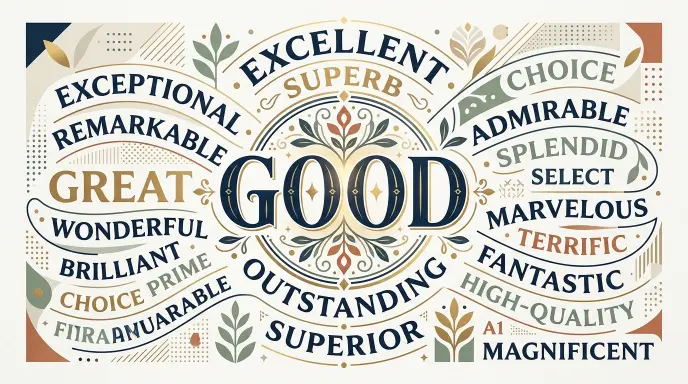
The word pretty is one of the most useful ways to describe something attractive, pleasant, or visually appealing.
You can call a person pretty, describe a pretty dress, praise a pretty garden, or say that a room looks pretty.
However, repeating the same word can make your writing feel limited, especially when you need a more precise, formal, professional, or expressive choice.
The best alternative depends on what you mean. Beautiful, lovely, attractive, charming, elegant, stunning, and gorgeous are related to pretty, but they do not always carry exactly the same tone or strength.
Some work well in academic or professional writing, while others sound natural only in casual conversation.
This guide explains the differences so you can choose the right word instead of simply replacing one adjective with another.
Quick Answer
What are the best synonyms for pretty?
The best synonyms for pretty include beautiful, lovely, attractive, charming, elegant, appealing, graceful, cute, gorgeous, stunning, delightful, and aesthetically pleasing. The right choice depends on context. Use beautiful for general praise, attractive for neutral or professional writing, elegant for refined appearance, and gorgeous or stunning for stronger, more enthusiastic praise.
Quick List of Synonyms for Pretty
Closest and common alternatives
- Beautiful
- Lovely
- Attractive
- Charming
- Appealing
- Good-looking
- Pleasing
- Delightful
- Graceful
- Elegant
Stronger alternatives
- Gorgeous
- Stunning
- Breathtaking
- Striking
- Exquisite
- Magnificent
- Spectacular
- Dazzling
Casual alternatives
- Cute
- Adorable
- Easy on the eyes
- Good-looking
- Sweet-looking
- Nice-looking
Formal or polished alternatives
- Aesthetically pleasing
- Elegant
- Refined
- Graceful
- Visually appealing
- Attractive
- Exquisite
Context-specific alternatives
- Scenic — for landscapes or views
- Picturesque — for charming visual scenes
- Delicate — for something fine or fragile-looking
- Sophisticated — for refined style
- Polished — for a finished, well-presented appearance
- Radiant — especially for a person’s glowing appearance
- Alluring — for an attractive quality that draws attention
Formal Alternatives

Beautiful
Meaning: Very pleasing to the senses, especially visually.
Explanation: Beautiful is one of the closest general alternatives to pretty. It usually sounds stronger and more sincere. Unlike pretty, which can suggest a delicate or pleasant appearance, beautiful can describe something deeply attractive or impressive.
Example: The museum contains several beautiful paintings.
Best Use: Formal writing, personal writing, speeches, descriptions, and everyday conversation.
Worst Use: It may be too subjective when you need an objective, technical description.
Tone: Warm, positive, and widely accepted.
Attractive
Meaning: Pleasant or appealing in appearance.
Explanation: Attractive is more neutral than pretty and works especially well in professional or objective writing. It can describe people, products, designs, buildings, websites, and ideas.
Example: The company created an attractive and easy-to-use website.
Best Use: Business writing, marketing, product descriptions, and professional communication.
Worst Use: It can sound impersonal when describing someone you know personally.
Tone: Neutral, professional, and objective.
Elegant
Meaning: Graceful, stylish, and refined.
Explanation: Elegant does not simply mean pretty. It suggests beauty combined with simplicity, good taste, or sophistication.
Example: She wore an elegant black dress to the ceremony.
Best Use: Fashion, interiors, architecture, design, formal events, and professional descriptions.
Worst Use: Avoid it when the subject is attractive but deliberately playful, messy, or informal.
Tone: Refined and sophisticated.
Charming
Meaning: Pleasant and attractive in a warm or appealing way.
Explanation: Charming often describes more than physical appearance. It can refer to a person’s personality, a small house, a village, a smile, or a pleasant atmosphere.
Example: They stayed in a charming little cottage near the lake.
Best Use: Travel writing, personal descriptions, lifestyle content, and creative writing.
Worst Use: It may sound too warm or personal for highly technical writing.
Tone: Warm, friendly, and appealing.
Graceful
Meaning: Attractive because of smooth, elegant movement or form.
Explanation: Graceful is more specific than pretty. It works especially well for movement, posture, dance, shapes, and elegant physical qualities.
Example: The dancer made a graceful turn across the stage.
Best Use: Dance, sports, art, movement, physical descriptions, and creative writing.
Worst Use: Do not use it as a universal replacement for pretty.
Tone: Elegant and expressive.
Appealing
Meaning: Attractive or interesting enough to create positive interest.
Explanation: Appealing can describe appearance, design, ideas, products, or experiences. It is broader than pretty and does not always refer to physical beauty.
Example: The new packaging has a clean and appealing design.
Best Use: Business, marketing, websites, products, and professional writing.
Worst Use: It may sound too general when you specifically want to praise beauty.
Tone: Neutral and professional.
Exquisite
Meaning: Extremely beautiful, delicate, or carefully made.
Explanation: Exquisite is considerably stronger than pretty. It often suggests exceptional quality, detail, or craftsmanship.
Example: The jeweler displayed an exquisite diamond necklace.
Best Use: Jewelry, art, fashion, craftsmanship, food presentation, and luxury writing.
Worst Use: Avoid it for ordinary objects unless you intentionally want an exaggerated effect.
Tone: Sophisticated and highly complimentary.
Aesthetically pleasing
Meaning: Attractive in terms of visual appearance and design.
Explanation: This is a more technical or analytical expression than pretty. It focuses on visual appeal rather than personal emotion.
Example: The architect designed an aesthetically pleasing public space.
Best Use: Academic writing, design, architecture, business, and analytical discussions.
Worst Use: It can sound stiff in casual conversation.
Tone: Formal, objective, and analytical.
Refined
Meaning: Elegant, polished, and developed with good taste.
Explanation: Refined suggests sophistication rather than simple physical attractiveness. It is particularly useful for style, design, manners, and presentation.
Example: The restaurant has a refined interior with simple furnishings.
Best Use: Fashion, hospitality, design, lifestyle writing, and professional descriptions.
Worst Use: Do not use it simply to mean that something has a pleasant color or appearance.
Tone: Sophisticated and polished.
Striking
Meaning: Extremely noticeable or impressive in appearance.
Explanation: Striking focuses on the ability to attract attention. Something striking does not have to be conventionally pretty.
Example: The building has a striking modern design.
Best Use: Architecture, photography, fashion, art, and visual descriptions.
Worst Use: It is not always a warm compliment; the subject may simply be unusual or attention-grabbing.
Tone: Strong, neutral-to-positive, and vivid.
Semi-Formal and Neutral Alternatives

Lovely
Meaning: Very pleasant, attractive, or enjoyable.
Explanation: Lovely is close to pretty but often feels warmer and more affectionate. It can describe people, places, objects, experiences, and even weather.
Example: We had a lovely afternoon in the garden.
Best Use: Personal writing, everyday conversation, emails, and friendly descriptions.
Worst Use: It may sound too personal for highly technical documents.
Tone: Warm and positive.
Good-looking
Meaning: Attractive in appearance.
Explanation: Good-looking is a direct and natural alternative when describing a person’s appearance. It is less delicate than pretty and often more neutral.
Example: He is a good-looking actor with a friendly smile.
Best Use: Everyday conversation and informal writing.
Worst Use: Avoid it when discussing objects that need a more precise description.
Tone: Casual and neutral.
Pleasing
Meaning: Giving a positive or enjoyable impression.
Explanation: Pleasing is broader than pretty. Something can be pleasing because of its appearance, sound, behavior, or overall effect.
Example: The final design is simple and pleasing to the eye.
Best Use: Reviews, design writing, professional descriptions, and general prose.
Worst Use: It may feel understated if you want to express strong admiration.
Tone: Neutral and restrained.
Cute
Meaning: Attractive in a sweet, small, youthful, or endearing way.
Explanation: Cute is not a direct replacement for every use of pretty. It often suggests charm, sweetness, or playfulness rather than conventional beauty.
Example: That’s a cute little café.
Best Use: Casual conversation, social media, children, pets, clothing, and small objects.
Worst Use: Avoid it in formal reports and serious professional communication.
Tone: Casual, friendly, and playful.
Delightful
Meaning: Very pleasant or enjoyable.
Explanation: Delightful can describe appearance, but it usually expresses overall enjoyment rather than physical beauty alone.
Example: The garden has a delightful combination of flowers and herbs.
Best Use: Descriptive writing, reviews, travel content, and friendly communication.
Worst Use: It may be too expressive for technical documents.
Tone: Warm and enthusiastic.
Graceful
Meaning: Elegant and attractive in form or movement.
Example: The swans made a graceful pattern across the water.
Best Use: Movement, art, architecture, nature, and descriptive writing.
Worst Use: It is not suitable for every object that is simply pretty.
Tone: Elegant and descriptive.
Picturesque
Meaning: Visually attractive in a charming, picture-like way.
Explanation: Picturesque is especially useful for landscapes, villages, streets, buildings, and travel scenes. It does not normally describe a person’s appearance.
Example: The town is surrounded by picturesque hills.
Best Use: Travel writing, geography, photography, and landscape descriptions.
Worst Use: Do not use it as a general synonym for a pretty person.
Tone: Descriptive and polished.
Scenic
Meaning: Providing an attractive view of natural surroundings.
Explanation: Scenic is narrower than pretty. It is mainly used for landscapes, routes, viewpoints, and natural surroundings.
Example: We took the scenic route along the coast.
Best Use: Travel writing and descriptions of landscapes.
Worst Use: It is incorrect for most people and everyday objects.
Tone: Neutral and descriptive.
Radiant
Meaning: Glowing with beauty, happiness, or health.
Explanation: Radiant suggests a bright, glowing appearance. It is often used for a person’s face, smile, or expression.
Example: She looked radiant on her wedding day.
Best Use: Personal writing, celebrations, fashion, and expressive descriptions.
Worst Use: It may sound exaggerated for ordinary situations.
Tone: Warm and expressive.
Alluring
Meaning: Attractive in a way that strongly draws attention or interest.
Explanation: Alluring is stronger and more suggestive than pretty. It can imply charm, mystery, or a powerful attraction.
Example: The resort has an alluring combination of quiet beaches and clear water.
Best Use: Creative writing, travel, fashion, advertising, and descriptive prose.
Worst Use: Avoid it when you simply mean pleasant-looking.
Tone: Sophisticated and evocative.
Informal and Casual Alternatives

Gorgeous
Meaning: Extremely attractive or beautiful.
Example: That sunset is gorgeous.
When it sounds natural: Friendly conversation, social media, compliments, fashion, and casual messages.
When to avoid it: Formal reports and academic writing.
Tone: Enthusiastic and strongly positive.
Stunning
Meaning: Extremely impressive or beautiful.
Example: You look stunning in that dress.
When it sounds natural: Compliments, photography, fashion, travel, and everyday conversation.
When to avoid it: Objective technical descriptions where emotional language is unnecessary.
Tone: Strong, enthusiastic, and expressive.
Adorable
Meaning: Extremely cute or endearing.
Example: Your puppy is adorable.
When it sounds natural: Pets, children, babies, small objects, and affectionate conversation.
When to avoid it: Serious professional writing or contexts requiring neutral description.
Tone: Affectionate and playful.
Easy on the eyes
Meaning: Pleasant or attractive to look at.
Example: The new website is definitely easy on the eyes.
When it sounds natural: Casual conversation and informal reviews.
When to avoid it: Academic, legal, and formal business writing.
Tone: Casual and conversational.
Sweet-looking
Meaning: Attractive in a gentle, pleasant, or innocent way.
Example: She has a sweet-looking smile.
When it sounds natural: Informal personal descriptions.
When to avoid it: Professional or analytical writing.
Tone: Friendly and affectionate.
True Synonyms vs. Contextual Alternatives
Not every word associated with pretty can replace it in every sentence. This distinction is essential if you want your writing to remain accurate.
| Type | What It Means | Can It Replace the Original? |
|---|---|---|
| True synonym | Has almost the same basic meaning in a particular context | Often |
| Near synonym | Has a closely related meaning but adds a different shade | Sometimes |
| Contextual alternative | Works naturally in a specific situation | Only in that context |
| Broader expression | Covers a wider idea than physical attractiveness | Sometimes |
| Narrower expression | Describes one specific type of attractiveness | Only in suitable contexts |
For example, beautiful can often replace pretty when describing a person or object. Scenic cannot replace it in the sentence “She is pretty” because scenic applies to attractive surroundings rather than people. Similarly, cute adds a sense of sweetness or playfulness that pretty does not necessarily contain.
Industry-Specific Usage
Business Writing
Business writing usually benefits from neutral terms such as attractive, appealing, visually appealing, and well-designed.
Instead of:
The company has a pretty website.
A stronger professional sentence is:
The company has an attractive, user-friendly website.
This version gives the reader more useful information and avoids sounding overly personal.
Corporate Communication
In reports, presentations, and internal documents, choose precise terms rather than emotional praise.
Example:
“The updated interface has a clean and visually appealing design.”
Here, visually appealing is more suitable than pretty because it sounds professional and explains what kind of appeal is being discussed.
Academic Writing
Academic writing generally favors objective language. Aesthetically pleasing, visually appealing, attractive, and elegant may work depending on the subject.
Example:
“The researchers developed an aesthetically pleasing interface that improved the presentation of the data.”
Avoid using pretty when the paper requires formal or analytical language.
Customer Service
Customer service language should be warm without becoming overly familiar.
Example:
“You have chosen a lovely design for your order.”
For a more neutral tone:
Example:
“The selected design has an attractive and modern appearance.”
Legal Writing
Legal writing rarely benefits from subjective words such as pretty, gorgeous, or beautiful. Legal documents usually require precise descriptions of facts, conditions, or characteristics.
Instead of describing property as “pretty,” a legal document might specify its architectural features, physical condition, dimensions, location, or visible characteristics.
The goal is not to find a fancier synonym. The goal is to describe the relevant fact accurately.
Email Communication
Professional emails usually work best with attractive, appealing, lovely, elegant, or well-designed, depending on the context.
For example:
The new presentation template has an elegant design.
This sounds more polished than:
The new presentation template looks pretty.
Email Examples
Client Design Feedback
Subject: Feedback on the New Website Design
Hello Sarah,
Thank you for sharing the latest website design. The new layout is clean, attractive, and much easier to navigate. I especially like the way the product categories are organized.
Please let me know when the revised mobile version is ready for review.
Best,
James
Project Update
Subject: Updated Presentation Template
Hi Team,
I reviewed the new presentation template this morning. The overall design is elegant, and the simplified layout makes the information easier to follow.
I suggest keeping the current structure for the final version.
Best,
Maya
Vendor Communication
Subject: Product Packaging Feedback
Hello Daniel,
We received the latest packaging samples today. The updated design is visually appealing and gives the product a more polished appearance.
We are happy with the direction and would like to review the final print version next week.
Regards,
Emily
Academic Communication
Subject: Feedback on the Project Presentation
Dear Professor Ahmed,
Thank you for reviewing my presentation. I have updated the visual elements and selected a more aesthetically pleasing layout so that the information is easier to read.
I would appreciate any additional feedback when you have time.
Kind regards,
Ali
Customer Service
Subject: Your Custom Design
Hello Maria,
Thank you for confirming your order. The floral design you selected is lovely and should work very well with the color scheme you requested.
We will send you a final preview before production begins.
Best regards,
Customer Support Team
Short Dialogue Examples
Workplace
Person A: What do you think of the new office design?
Person B: It looks elegant. I like the simple furniture and natural lighting.
Classroom
Person A: How would you describe the painting?
Person B: I would call it beautiful rather than pretty. The colors are much more dramatic.
Customer Service
Person A: Do you like this design?
Person B: Yes. It’s attractive without looking too busy.
Casual Conversation
Person A: Look at this little café!
Person B: It’s so cute. I love the outdoor seating.
Professional Discussion
Person A: How would you describe the new website?
Person B: I’d say it’s visually appealing and much easier to navigate.
How to Replace “Pretty” in a Sentence
Example 1
Original: She wore a pretty dress.
Alternative: She wore an elegant dress.
Why it works: Elegant adds the idea of sophistication and refined style.
Example 2
Original: We visited a pretty village.
Alternative: We visited a picturesque village.
Why it works: Picturesque is especially suitable for attractive villages and scenic settings.
Example 3
Original: She has a pretty smile.
Alternative: She has a lovely smile.
Why it works: Lovely preserves the warm, personal feeling of the original.
Example 4
Original: The website has a pretty design.
Alternative: The website has an attractive design.
Why it works: Attractive sounds more neutral and professional.
Example 5
Original: The flowers are pretty.
Alternative: The flowers are beautiful.
Why it works: Beautiful is a natural general replacement and gives slightly stronger praise.
Example 6
Original: That’s a pretty little house.
Alternative: That’s a charming little house.
Why it works: Charming adds warmth and character rather than simply describing appearance.
Example 7
Original: The new interface looks pretty.
Alternative: The new interface is visually appealing.
Why it works: The alternative is better suited to professional or technical discussion.
Example 8
Original: You look pretty tonight.
Alternative: You look stunning tonight.
Why it works: Stunning makes the compliment much stronger and more enthusiastic.
Comparison of Common Alternatives
| Phrase | Tone | Meaning / Scope | Best Use | Example |
|---|---|---|---|---|
| Beautiful | Warm, positive | Strong general beauty | General writing | A beautiful garden |
| Attractive | Neutral | Pleasant appearance | Business | An attractive design |
| Lovely | Warm | Pleasant and attractive | Personal writing | A lovely smile |
| Elegant | Refined | Stylish and sophisticated | Fashion/design | An elegant dress |
| Charming | Warm | Attractive with character | Places/people | A charming village |
| Appealing | Neutral | Creates positive interest | Business/marketing | An appealing layout |
| Gorgeous | Casual | Very beautiful | Conversation | A gorgeous view |
| Stunning | Expressive | Extremely impressive | Compliments | A stunning photograph |
| Cute | Playful | Sweet or endearing | Casual settings | A cute puppy |
| Picturesque | Descriptive | Beautiful like a picture | Landscapes | A picturesque town |
| Exquisite | Formal | Exceptionally beautiful | Luxury/art | An exquisite necklace |
| Striking | Strong | Highly noticeable | Art/design | A striking building |
| Radiant | Expressive | Glowing with beauty | People | A radiant smile |
| Aesthetically pleasing | Formal | Visually attractive | Academic/design | An aesthetically pleasing interface |
Which Alternative Should You Choose?
For formal writing
Choose attractive, aesthetically pleasing, elegant, or refined, depending on the subject.
For business communication
Choose attractive, appealing, visually appealing, or well-designed.
For academic writing
Choose aesthetically pleasing, visually appealing, or another objective description that explains the specific quality.
For legal writing
Avoid subjective beauty words whenever possible. Describe measurable or relevant characteristics instead.
For professional email
Use attractive, elegant, appealing, or lovely when the context is personal and friendly.
For everyday conversation
Pretty, beautiful, lovely, cute, gorgeous, and stunning are all natural, depending on how strong and casual you want the compliment to be.
For casual messages
Cute, gorgeous, stunning, and beautiful are common choices.
Grammar and Usage Guide
Pretty as an adjective
When pretty means attractive, it is normally an adjective placed before a noun or after a linking verb.
Before a noun:
She bought a pretty dress.
After a linking verb:
The garden looks pretty.
The word can describe people, objects, places, designs, and other things that have an attractive appearance.
Pretty as an adverb
Pretty also has another meaning: fairly, rather, or moderately.
The test was pretty difficult.
Here, pretty does not mean beautiful. It modifies difficult and means “fairly” or “quite.”
This distinction matters because replacing it with beautiful would completely change the sentence.
Pretty versus prettily
Pretty is the normal adjective:
She is pretty.
Prettily is an adverb and is much less common:
The flowers were prettily arranged.
In most modern writing, a clearer construction such as “beautifully arranged” may sound more natural depending on the intended meaning.
Pretty little
The combination pretty little is common in English.
They live in a pretty little cottage.
Here, pretty describes appearance while little describes size.
Pretty much
Pretty much is an informal expression meaning “almost,” “mostly,” or “nearly.”
I pretty much finished the assignment.
It has nothing to do with physical attractiveness.
Common Mistakes to Avoid
Treating every alternative as an exact synonym
Cute, beautiful, elegant, and scenic all relate to attractiveness, but each carries a different meaning. Choose based on the specific quality you want to express.
Using casual words in formal writing
Words such as gorgeous, cute, and easy on the eyes can sound too informal in academic or corporate documents.
Using formal language in casual conversation
Saying “Your outfit is aesthetically pleasing” may be grammatically correct but unnecessarily stiff in a normal conversation.
Confusing pretty with beautiful
The two words overlap, but beautiful can suggest a stronger or deeper quality of beauty.
Using scenic for people
Scenic normally describes attractive views, landscapes, or routes. It is not a natural synonym for a person’s appearance.
Using cute when you mean elegant
A formal dress can be beautiful or elegant without being cute. Cute suggests sweetness or playfulness.
Overusing strong compliments
Words such as stunning, gorgeous, and breathtaking express strong admiration. Using them for everything can make your writing less believable.
Ignoring the audience
A word that sounds friendly in a text message may sound inappropriate in a report. Always consider who will read the sentence.
When Not to Use “Pretty”
When you need an objective description
Professional and academic writing often benefits from specific descriptions rather than subjective praise.
Instead of:
The building is pretty.
Try:
The building has a simple modern façade and large glass windows.
When the subject needs technical precision
If you are discussing design, architecture, or user experience, terms such as visually appealing, balanced, refined, or well-designed may communicate more information.
When the tone is highly formal
In a research paper or formal report, pretty may sound conversational. A more precise term can improve the tone.
When the meaning is unclear
If you mean that something is visually impressive rather than simply attractive, striking or stunning may be clearer.
When you are describing a landscape
Use scenic or picturesque when those words accurately describe the setting.
When you want to praise craftsmanship
Use exquisite, refined, or beautifully crafted when the quality of construction or detail matters.
When “pretty” is actually the better choice
Do not replace pretty merely because you want a more sophisticated word. In everyday English, “That dress is pretty” is natural, clear, and completely correct. Simple words are often the strongest choice when they express exactly what you mean.
Advanced Writer Tips
Tone Control
You can adjust the emotional strength of your sentence by choosing different alternatives.
Neutral: The room is attractive.
Warm: The room is lovely.
Refined: The room is elegant.
Strong: The room is stunning.
Technical: The room is aesthetically pleasing.
The basic idea remains similar, but the emotional effect changes.
Professional Email Etiquette
In professional emails, avoid exaggerated compliments unless they are appropriate to the relationship. Attractive, appealing, and well-designed often sound more natural than gorgeous or stunning.
Politeness
Compliments can become more personal as you move from neutral words to expressive ones. “The design is attractive” focuses on the design, while “You look stunning” directly compliments the person.
When writing professionally, focus praise on the work, product, or result rather than making personal comments unless the context clearly supports them.
Context Alignment
Ask yourself three questions before choosing a replacement:
- What exactly am I describing?
- Who will read or hear this?
- How strong should the compliment be?
These questions can quickly eliminate unsuitable choices.
Precision
If you mean simple beauty, use beautiful.
If you mean professional visual appeal, use attractive.
If you mean refined style, use elegant.
If you mean sweetness, use cute.
If you mean exceptional beauty, use stunning, gorgeous, or exquisite.
If you mean a charming landscape, use picturesque or scenic.
Readability
Do not choose a complicated phrase simply to avoid repeating pretty. Sometimes a short, familiar word is clearer.
Compare:
The website is aesthetically pleasing to visitors.
with:
The website looks attractive.
The first may suit an academic or design discussion. The second is simpler and more natural for general readers.
Related Questions
What is another way to say “pretty”?
Common alternatives include beautiful, lovely, attractive, charming, appealing, elegant, cute, gorgeous, and stunning. The best choice depends on whether you want a neutral, formal, affectionate, or enthusiastic tone.
What is a professional alternative to “pretty”?
Attractive, appealing, visually appealing, and well-designed are strong professional choices. For design or academic contexts, aesthetically pleasing may also work.
What is a formal synonym for “pretty”?
Beautiful, elegant, refined, exquisite, and aesthetically pleasing can work in formal contexts, although they are not interchangeable in every sentence.
Is “pretty” a formal word?
Pretty is a standard English word, but when it means attractive, it is generally neutral to conversational rather than highly formal. It is perfectly appropriate in everyday writing and speech.
Can “beautiful” replace “pretty”?
Often, yes. However, beautiful is usually stronger and can carry a deeper or more expressive sense of beauty. The two words should not automatically be treated as identical.
Can “cute” replace “pretty”?
Sometimes. Cute usually adds a sense of sweetness, youthfulness, smallness, or playfulness. It is therefore narrower and more casual than pretty.
What is the difference between “pretty” and “gorgeous”?
Both can describe attractive appearance, but gorgeous is much stronger and more enthusiastic. “Pretty” can be a mild compliment, while “gorgeous” normally expresses strong admiration.
FAQs
Is “pretty” the same as “beautiful”?
Not exactly. The words overlap, but beautiful is often stronger and broader. Pretty can suggest pleasant, delicate, or attractive appearance, while beautiful can describe a more powerful or profound kind of beauty.
What is the most professional synonym for “pretty”?
Attractive is usually the safest professional alternative. Depending on context, visually appealing, well-designed, elegant, or aesthetically pleasing may be more precise.
What is a stronger word than “pretty”?
Gorgeous, stunning, breathtaking, and exquisite are generally stronger. The best option depends on whether you are describing a person, place, object, artwork, or design.
What is a softer alternative to “beautiful”?
Lovely is often a softer and warmer alternative. Pretty itself can also sound softer than beautiful, especially when describing a person’s appearance.
Is “cute” a synonym for “pretty”?
It can be a contextual alternative, but it is not an exact synonym. Cute usually includes a sense of sweetness, charm, youth, or playfulness.
What word should I use instead of “pretty” in an essay?
For an essay, choose a word that describes the specific quality you mean. Beautiful, attractive, elegant, visually appealing, or aesthetically pleasing may work depending on the subject and academic context.
Which synonym for “pretty” sounds the most natural?
Beautiful, lovely, and attractive are among the most broadly useful. For casual conversation, pretty itself is often the most natural choice.
Key Takeaways
- Beautiful is one of the closest general alternatives to pretty, but it can sound stronger.
- Attractive works especially well in neutral, business, and professional writing.
- Elegant, refined, and exquisite describe specific types or levels of beauty rather than simply replacing pretty.
- Cute, gorgeous, and stunning are more casual or expressive and should match the audience.
- Always choose a synonym based on meaning, tone, subject, audience, and context, not simply because it sounds more sophisticated.
Conclusion
The best synonym for pretty is not always the most impressive-sounding word.
The right choice depends on what you actually want to communicate.
Beautiful is a versatile general alternative, attractive is useful for professional and neutral writing, lovely adds warmth, and elegant suggests refinement.
For stronger praise, gorgeous and stunning work well in casual settings, while exquisite can suit exceptional craftsmanship or luxury.
Some alternatives are more specific. Picturesque works for attractive scenes, scenic for landscapes, cute for sweet or playful subjects, and radiant for a glowing appearance.
In formal or academic writing, precise expressions such as visually appealing or aesthetically pleasing may be more appropriate.
The key is to avoid treating every related word as interchangeable.
A good writer chooses the word that matches the subject, audience, tone, and exact shade of meaning.
Sometimes that word will be pretty itself—and that is perfectly good English.